
Yes, you can buy your next home before you sell your current one. For these business owners, a bank statement loan let us count the income they actually earn (not just what's left after write-offs on their tax returns), and a bridge loan unlocked the equity in their townhouse for the down payment, with no payments for the first 4 months and time to sell on their own terms.
Where it started
My clients came to me with a lot on their plate. They owned a townhouse they wanted to sell, they wanted to buy a home that fit their family better, and they were trying to figure out what all of that would look like in real numbers. Selling and buying at the same time is a lot to manage, and they did not want to feel pressured into a decision.
They also own a business. Like many business owners, they follow their CPA's tax strategy and take the write-offs the tax code allows, which means the income on their tax returns is a lot lower than what the business actually brings in. Who wants to pay more taxes than they have to? Not me!
Why a bank statement loan was the right fit
We chose a bank statement loan, because it let us count the income they actually earn instead of the net income left on their tax returns after deductions.
We just needed 12 months of bank statements. We added up their deposits, applied the guideline math, and found out how much income we could count. It was more than enough.
Why so many business owners are told to "just wait"
Here is what a lot of people don't realize. Many loan officers will tell a business owner to wait a year or two and report all of their income on their tax returns before they buy. In other words, they ask you to override your CPA's advice. And that means paying taxes, often a lot of taxes, when there's a better way.
So why don't more loan officers bring up bank statement loans? In my experience (and I saw this firsthand at a previous company), it's about control. At many lenders, bank statement loans are sent out to a third-party broker. Once the file leaves the building, you cross your fingers and hope for the best. Loan officers don't want to risk their reputation on a process they can't see, so they stick to tax return income, because that's what they can handle in-house.
The result? Business owners get asked to pay tens of thousands of dollars in extra taxes simply because their lender doesn't have the right product.
What's different when it's done in-house
At my company, the bank statement loan is in-house. That means we keep full control of the file from start to finish. Our underwriters, our processors, our assistants and our guidelines. We know from day one exactly what income we can use, so there's no guessing. That level of control is what lets me recommend this option with confidence.
| Qualifying with tax returns | Qualifying with a bank statement loan | |
|---|---|---|
| Income that counts | Net income after write-offs | Income based on your actual deposits |
| What you may need to do first | Report more income and pay more tax, often waiting a year or two | Keep following your CPA's strategy |
| Interest rate | Typically lower | Typically a little higher |
| Bottom line | Higher tax bill to qualify | Often far more total savings |
Yes, a bank statement loan usually comes with a slightly higher rate. But when you put it side by side with the extra taxes you'd pay to qualify on the same income, it very often comes out as the clear winner, with real savings overall.
Then they found the one
While we were reviewing their bank statements and working out their approval amount, just two days into the process, they found their dream home.
This was the one. They were in love with it, my phone started lighting up, and they wanted to find a way to make it theirs. There was just one problem: their down payment was tied up in the equity of their townhouse.
The old way vs. the better way
Another loan officer might have told them the only way to free up that equity was to sell the townhouse fast and try to close on both homes at the same time. Honestly, when I first started as a loan officer, that would have been my advice too. But when you know better, you do better.
Today I use what I believe is one of the best bridge loans available. There are no payments for the first 4 months, and we can use the equity in the current home toward the down payment on the new one.
| Selling first under pressure | Using a bridge loan |
|---|---|
| Rush to list, stage and show the home while still living in it | Move first, then prepare the old home on your own schedule |
| Hope for an offer within days to make the timeline work | Up to 4 months to sell, with up to 2 extensions |
| Accept whatever price the market gives you that week | Build a pricing and marketing plan with your agent |
| Risk losing the dream home to a stronger offer | Use your equity for the down payment now |
So that's exactly what we did. No fire sale. No panic. No racing to list a perfectly staged home and hoping to be in contract within a few days, taking whatever price the market would give them because the clock was running.
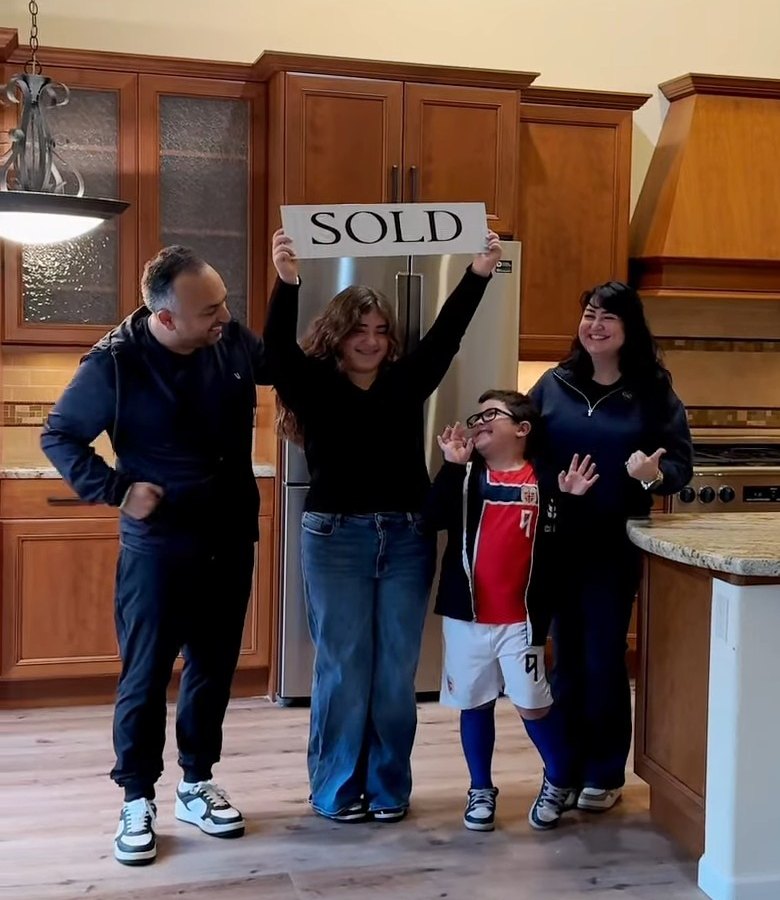
Instead, we used a bridge loan to put the equity from their townhouse toward the down payment on their dream home. And then they got to unlock the front door and know their dream had become a reality.
One step at a time
Now that they're moving in, they get to do everything one step at a time:
- Move their belongings from one home to the next without a race against the clock
- Make any repairs or updates that could add value to the townhouse
- Get it cleaned and staged the right way
- Work with their agent on a pricing and marketing strategy
They have 4 months, plus up to 2 extensions after that, to sell their previous home and pay off the bridge loan.
I've seen this go so many other ways. This is a much better way to do real estate.
If you own a home and you've been wondering how you could ever buy the next one without selling first, or you're a business owner who's been told to wait and pay more in taxes before you can buy, let's talk. There's very likely a better path than the one you've been told about.
Straight answers
Can I buy a new home before I sell my current one?
How long do I have to sell my old home with a bridge loan?
Do I make payments on the bridge loan?
What is a bank statement loan?
Does a bank statement loan cost more than a regular mortgage?
Do I need to stop taking write-offs to qualify for a mortgage?
Wondering if this could work for you?
Tell me what you own, what you want to buy, and how you earn your income. I'll show you your options side by side, with no pressure.
Written by Ashley Gurevich, Senior Loan Officer at CrossCountry Mortgage (NMLS #847540), licensed in California and Washington. Published October 31, 2026.
This article is for general education and is not a commitment to lend or a loan approval. Program availability, terms and guidelines change and depend on your full application, credit, income, assets and property. Talk with a licensed loan officer about your specific situation. Equal Housing Opportunity.